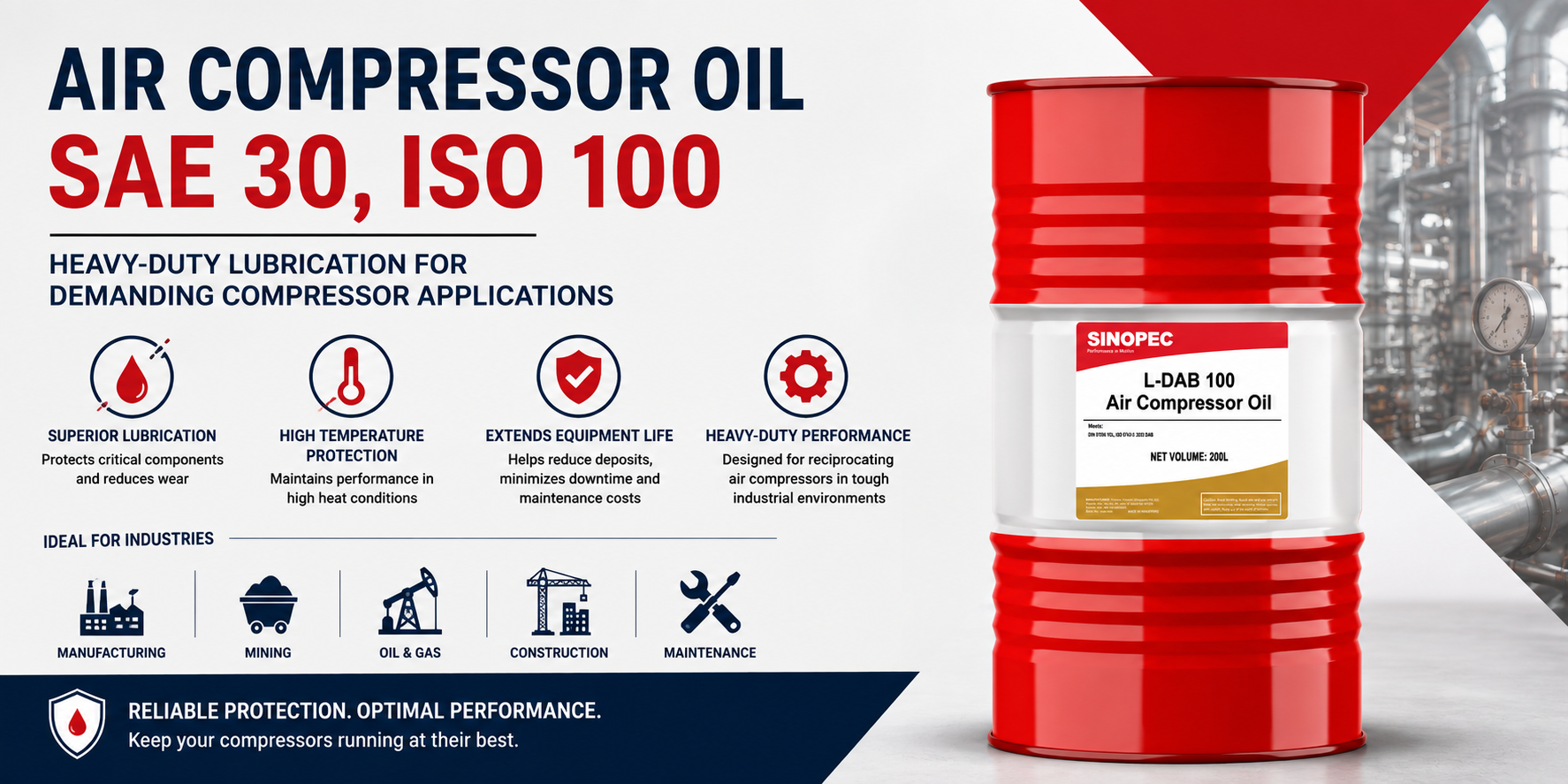
Not all air compressors operate under the same conditions. Heavy-duty reciprocating (piston) compressors often generate higher discharge temperatures and experience greater mechanical loading than many rotary screw compressors. Because of these operating conditions, many manufacturers specify SAE 30 (ISO VG 100) compressor oil to maintain an adequate lubricating film and protect critical components. Always follow the compressor manufacturer's viscosity recommendation.
Why Some Compressors Need ISO 100 Instead of ISO 32
This is the heart of the article.
| ISO 32 | ISO 100 |
|---|---|
| Lower viscosity | Higher viscosity |
| Faster circulation | Stronger oil film |
| Continuous rotary screw compressors | Heavy-duty reciprocating compressors* |
| Cooler operating conditions | Higher discharge temperatures |
*Actual lubricant selection always depends on the OEM specification.
Where SAE 30 Compressor Oil Is Commonly Used
This section makes the article industry-focused.
Mining Operations
Compressed air powers:
- Jackhammers
- Rock drills
- Pneumatic breakers
- Underground maintenance equipment
These applications often operate in dusty, high-load environments where lubricant cleanliness and oxidation resistance are important.
Construction Equipment
Examples include:
- Mobile air compressors
- Pneumatic concrete breakers
- Sandblasting compressors
- Road maintenance equipment
Many jobsites experience high ambient temperatures and continuous operation.
Oil & Gas Facilities
Compressed air is used for:
- Instrument air
- Valve actuation
- Maintenance systems
- Utility air
Reliability is essential because unexpected compressor shutdowns can disrupt plant operations.
Manufacturing Plants
Heavy-duty piston compressors continue to be used in:
- Forging
- Steel fabrication
- Machine shops
- Heavy manufacturing
Why Higher Viscosity Matters
Explain the engineering rather than selling the oil.
A thicker lubricant can:
- Maintain a stronger lubricating film under heavier loads.
- Help reduce metal-to-metal contact.
- Improve protection at elevated operating temperatures.
- Support reliable lubrication of cylinders, bearings, and crank mechanisms where specified by the OEM.
Using a viscosity that is too low for the application can reduce film thickness and accelerate wear.
Common Causes of Compressor Oil Failure
Instead of focusing only on oil changes.
Discuss:
- Oxidation
- Carbon deposits
- Overheating
- Moisture contamination
- Dust contamination
- Extended drain intervals
Explain how these conditions can reduce efficiency and increase maintenance requirements.
Five Maintenance Practices That Extend Compressor Life
- Use the OEM-recommended viscosity.
- Monitor discharge temperature.
- Replace filters on schedule.
- Perform periodic oil analysis.
- Keep cooling surfaces clean.
Industry Checklist
Is SAE 30 / ISO 100 Right for Your Compressor?
✔ Heavy-duty reciprocating compressor
✔ High operating temperatures
✔ Industrial manufacturing
✔ Mining equipment
✔ Construction compressors
✔ OEM specifies ISO VG 100 or SAE 30
If not, use the lubricant viscosity recommended by the equipment manufacturer.
Why do piston air compressors use SAE 30 oil?
Many industrial reciprocating compressors require a higher-viscosity oil to maintain lubrication under higher operating temperatures and heavier mechanical loads, but the OEM specification should always be followed.
Is ISO 100 compressor oil thicker than ISO 32?
Yes. ISO VG 100 has a higher viscosity than ISO VG 32, providing a thicker lubricating film under operating conditions.
Can ISO 32 replace ISO 100?
Not unless the compressor manufacturer approves it. Using a lower viscosity than specified may reduce lubrication under certain operating conditions.
What industries commonly use SAE 30 compressor oil?
Heavy-duty manufacturing, mining, construction, oil and gas, and industrial maintenance operations commonly use compressors that may specify SAE 30 / ISO 100, depending on the equipment design.