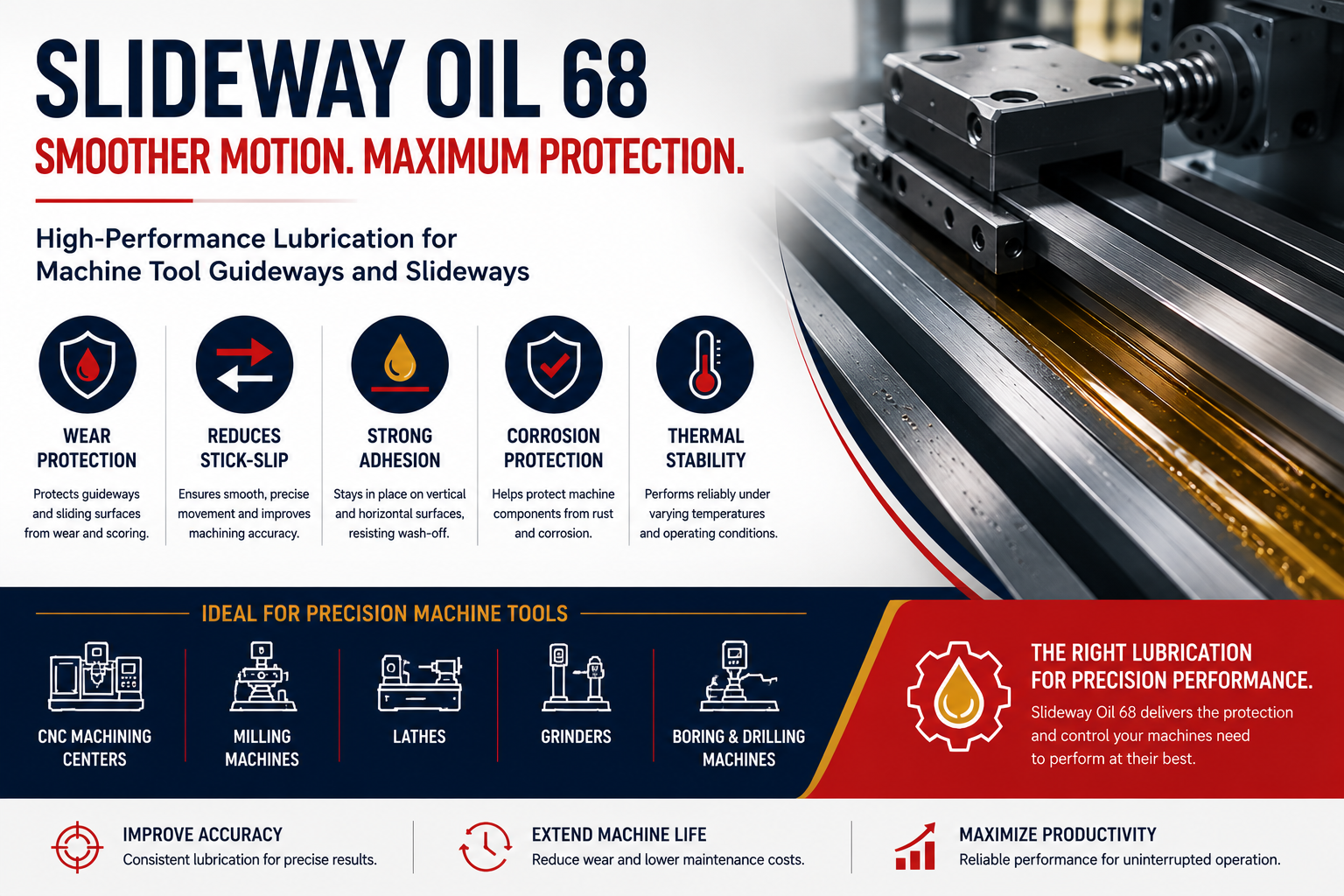
Precision machine tools rely on smooth and controlled movement to produce accurate parts and maintain consistent production quality. Whether operating a CNC machining center, horizontal boring mill, lathe, or heavy-duty milling machine, proper guideway lubrication is essential for minimizing wear and maintaining positioning accuracy.
Slideway Oil 68 is specifically formulated for machine tool guideways operating under moderate to heavy loads. It helps reduce stick-slip, protects sliding surfaces, resists coolant wash-off, and maintains a durable lubricating film that supports precision machining.
Using the correct slideway lubricant improves machine reliability, extends equipment life, and helps manufacturers maintain tight machining tolerances.
What Is Slideway Oil 68?
Slideway Oil 68 is a specialized guideway lubricant designed for machine tools requiring ISO VG 68 slideway oil.
Unlike general-purpose lubricants, slideway oils are formulated with carefully balanced friction modifiers and tackiness additives that help the lubricant remain on sliding surfaces while allowing smooth and controlled movement.
Its primary functions include:
- Lubricating machine guideways
- Reducing friction and wear
- Preventing stick-slip
- Improving positioning accuracy
- Protecting against corrosion
- Resisting coolant contamination
Why Machine Tool Guideways Require Specialized Oil
Machine guideways operate under unique conditions.
Unlike gears or bearings that rotate continuously, guideways move slowly while supporting substantial machine loads. During machining operations, guide surfaces must move smoothly without hesitation to maintain dimensional accuracy.
Using an ordinary hydraulic or machine oil may result in:
- Inconsistent table movement
- Increased friction
- Premature guideway wear
- Reduced machining accuracy
- Poor surface finish
Slideway Oil 68 is engineered to provide controlled friction characteristics specifically for machine tool guideways.
Why ISO VG 68 Is Commonly Used
ISO VG 68 offers a higher viscosity than ISO VG 32, allowing it to maintain a stronger lubricating film on guideways subjected to heavier loads or slower movement.
This viscosity is commonly selected for:
- Medium-duty machining centers
- Large milling machines
- Horizontal boring mills
- Engine lathes
- Heavy-duty grinders
The higher oil film strength helps protect guide surfaces while maintaining smooth machine movement.
Always follow the machine manufacturer's viscosity recommendation.
Understanding Stick-Slip
Stick-slip is one of the most common causes of positioning problems in machine tools.
It occurs when sliding surfaces repeatedly stick together before suddenly breaking free.
This results in:
- Jerky machine movement
- Poor dimensional accuracy
- Surface finish defects
- Increased vibration
- Higher guideway wear
Slideway Oil 68 contains friction modifiers designed to minimize stick-slip and provide smooth, controlled linear motion.
Typical Applications for Slideway Oil 68
CNC Machining Centers
Protects:
- Linear guideways
- Machine tables
- Cross slides
- Feed systems
Supports consistent positioning during precision machining.
Milling Machines
Lubricates:
- Knee guideways
- Saddle assemblies
- Table slides
Helps maintain smooth travel under cutting loads.
Engine and CNC Lathes
Protects:
- Bed ways
- Carriage slides
- Compound rests
- Tailstock guideways
Reduces wear during continuous machining.
Horizontal Boring Mills
Supports lubrication of:
- Large guide rails
- Moving columns
- Heavy machine tables
Provides stable lubrication under substantial machine loads.
Surface and Cylindrical Grinders
Helps ensure:
- Smooth reciprocating table movement
- Improved positioning accuracy
- Reduced guideway wear
Components Protected by Slideway Oil
Proper lubrication protects many precision machine components, including:
- Linear guideways
- Machine beds
- Cross slides
- Machine tables
- Carriage assemblies
- Feed mechanisms
- Guide rails
- Sliding columns
Maintaining proper lubrication helps preserve machine accuracy over extended service intervals.
Common Causes of Guideway Wear
Guideway damage often results from lubrication problems rather than mechanical failure.
Common causes include:
Insufficient Lubrication
Poor lubrication increases friction and accelerates wear.
Coolant Contamination
Coolant entering lubrication systems reduces oil effectiveness.
Metal Chips and Abrasives
Contaminants can scratch guide surfaces and increase wear.
Incorrect Oil Selection
Using hydraulic oil instead of slideway oil may increase stick-slip and reduce lubrication performance.
Poor Maintenance
Blocked lubrication lines or irregular lubrication intervals shorten machine life.
Best Practices for Guideway Lubrication
To maximize machine accuracy:
- Use the slideway oil recommended by the machine manufacturer.
- Inspect automatic lubrication systems regularly.
- Keep guideways free from chips and debris.
- Monitor oil condition.
- Replace contaminated lubricant promptly.
- Check lubrication flow to all guide surfaces.
- Follow preventive maintenance schedules.
Proper lubrication helps preserve machine precision while reducing repair costs.
Industries That Commonly Use Slideway Oil 68
Slideway Oil 68 is widely used in:
- Precision machining
- Automotive manufacturing
- Aerospace manufacturing
- Tool and die production
- Heavy equipment manufacturing
- General metalworking
- Industrial maintenance facilities
- CNC production shops
Slideway Oil 68 Compared to Other Guideway Oils
| Viscosity Grade | Typical Applications |
|---|---|
| ISO VG 32 | High-speed or lightly loaded guideways |
| ISO VG 68 | Medium- and heavy-duty machine tools with higher guideway loads |
| ISO VG 220 | Large vertical guideways and very heavily loaded machine tools |
The appropriate viscosity depends on machine design, operating conditions, and the manufacturer's recommendations.
Frequently Asked Questions
What is Slideway Oil 68 used for?
Slideway Oil 68 is used to lubricate machine tool guideways, helping reduce friction, prevent stick-slip, protect against wear, and maintain smooth, accurate machine movement.
Why use slideway oil instead of hydraulic oil?
Slideway oil contains friction modifiers and tackiness additives designed specifically for guideway lubrication. These additives help prevent stick-slip and improve adhesion to sliding surfaces.
What machines commonly use ISO VG 68 slideway oil?
It is commonly used in CNC machining centers, milling machines, lathes, horizontal boring mills, grinders, and other precision machine tools that specify ISO VG 68.
How does Slideway Oil 68 improve machining accuracy?
By maintaining a consistent lubricating film and reducing stick-slip, Slideway Oil 68 helps guideways move smoothly and accurately, improving positioning precision and surface finish.
Can Slideway Oil 68 be used on vertical guideways?
Yes, many machine manufacturers specify ISO VG 68 for vertical and inclined guideways because its higher viscosity and tackiness help the lubricant remain on sliding surfaces. Always verify the OEM recommendation.
Choosing the Right Slideway Oil
When selecting a guideway lubricant, consider:
- OEM viscosity recommendation
- Machine size
- Guideway design
- Load conditions
- Operating speed
- Coolant compatibility
- Lubrication system type
- Maintenance schedule
Using the correct lubricant helps maximize machine accuracy, reduce wear, and improve long-term reliability.
Slideway Oil 68 is designed to provide dependable lubrication for medium- and heavy-duty machine tool guideways. Its specialized formulation helps reduce stick-slip, maintain a durable lubricating film, resist coolant wash-off, and protect precision sliding surfaces from wear.
For CNC machining centers, lathes, milling machines, boring mills, and other precision equipment, selecting the correct guideway lubricant is essential for maintaining machining accuracy, extending machine life, and supporting consistent production performance.