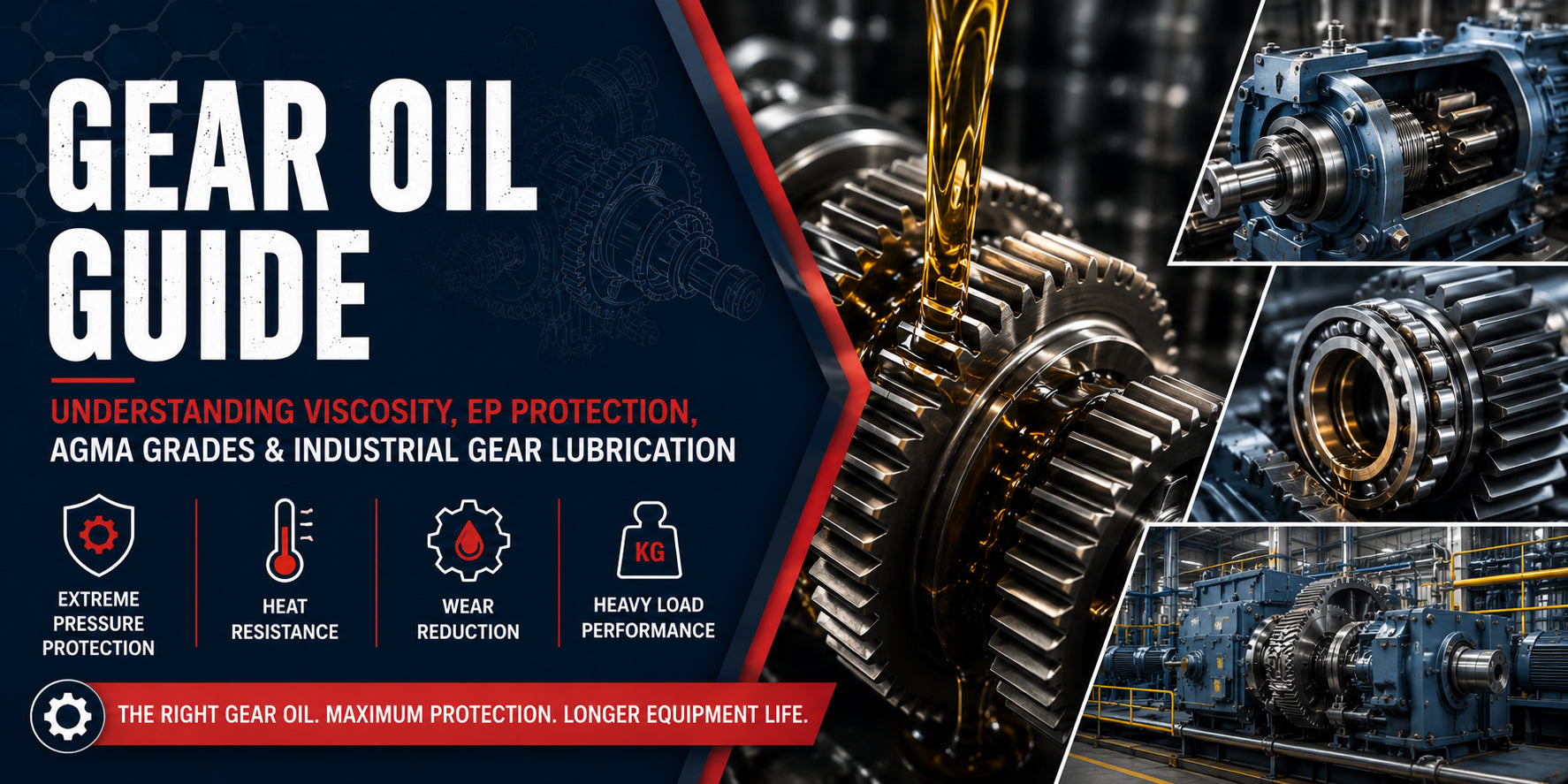
Gear Oil Guide: How to Choose the Right Gear Oil for Industrial & Automotive Applications
Gear oil is designed to lubricate gears, bearings, and enclosed gear systems operating under load, pressure, heat, and shock conditions. Choosing the correct gear oil depends on viscosity grade, operating temperature, load requirements, gear type, and manufacturer recommendations.
The best gear oil depends on gear type, speed, load, operating temperature, and application requirements. Common gear oil grades include 75W90, 80W90, 85W140, ISO 220, ISO 320, ISO 460, and AGMA gear oils.
Quick Gear Oil Facts
Extreme Pressure Protection
Gear oil protects gears operating under high pressure and heavy loads.
Heat Resistance
Helps control heat and reduce thermal breakdown in gear systems.
Wear Reduction
Helps reduce metal-to-metal contact and surface wear.
Longer Gear Life
Proper lubrication helps extend gearbox and bearing life.
What Is Gear Oil?
Gear oil is a lubricant specifically formulated for gear systems operating under load, friction, shock loading, and high contact pressure. It creates a protective lubricating film between gear teeth and moving surfaces.
Gear oils often contain extreme pressure (EP) additives, anti-wear additives, rust inhibitors, oxidation inhibitors, and anti-foam additives to help protect equipment.
What Is Gear Oil Used For?
- Industrial enclosed gear drives
- Automotive differentials and transmissions
- Heavy-duty gearboxes
- Construction and mining equipment
- Marine gear systems
- Conveyors and manufacturing equipment
- Worm gears and industrial reducers
Common Types of Gear Oil
EP Gear Oil
EP gear oil contains extreme pressure additives designed for heavy loads, shock loading, and high-pressure gear contact.
Synthetic Gear Oil
Synthetic gear oils provide improved temperature performance, oxidation resistance, and longer service life.
Industrial Gear Oil
Industrial gear oils are designed for enclosed gear systems, industrial machinery, and heavy-duty operations.
Worm Gear Oil
Worm gear oils are formulated for worm gears operating under sliding contact and heat.
Gear Oil Viscosity Grades Explained
Gear oil viscosity affects film thickness, protection level, startup flow, and operating temperature performance. Different applications require different viscosity grades.
| Gear Oil Grade | Common Use | Application Type |
|---|---|---|
| 75W90 | Multi-grade synthetic gear oil | Automotive differentials and gear systems |
| 80W90 | Heavy-duty automotive gear oil | Axles, differentials, industrial equipment |
| 85W140 | High-viscosity gear oil | Heavy-load and high-temperature applications |
| ISO 220 | Industrial gear oil | Enclosed industrial gear drives |
| ISO 320 | Heavy industrial gear oil | High-load enclosed gear systems |
| ISO 460 | Very high viscosity gear oil | Slow-speed heavy-duty gear systems |
What Does AGMA Mean in Gear Oil?
AGMA stands for the American Gear Manufacturers Association. AGMA grades are used to classify industrial gear oil viscosity ranges for enclosed gear systems.
Common AGMA grades include AGMA 4, AGMA 5, AGMA 6, AGMA 7, and AGMA 8, depending on application requirements and operating conditions.
Best Gear Oil by Application
Automotive Differentials
Multi-grade gear oils such as 75W90 and 80W90 are commonly used.
Industrial Gearboxes
ISO 220, ISO 320, and ISO 460 industrial gear oils are widely used.
Heavy-Duty Equipment
EP gear oils help protect construction and mining equipment under heavy loads.
Worm Gear Drives
Worm gear oils are designed for sliding-contact gear systems and heat management.
How to Choose the Right Gear Oil
- Check the equipment manual for required viscosity and specifications.
- Match the viscosity grade to operating temperature and load conditions.
- Use EP gear oil for heavy-load and shock-load applications.
- Consider synthetic gear oil for extended service intervals and temperature stability.
- Avoid mixing incompatible lubricants unless compatibility is confirmed.
Common Gear Oil Mistakes to Avoid
Using the Wrong Viscosity
Incorrect viscosity may reduce lubrication performance and gear protection.
Ignoring Temperature Conditions
High or low temperatures may require different gear oil formulations.
Delaying Oil Changes
Old gear oil may lose protection properties and increase wear.
Mixing Unknown Oils
Mixing incompatible oils may affect additive performance and protection.
Gear Oil FAQs
What does EP mean in gear oil?
EP stands for Extreme Pressure and refers to additives designed for high-load gear protection.
What is the difference between 75W90 and 80W90?
Both are multi-grade gear oils, but they differ in low-temperature flow and viscosity characteristics.
What gear oil is best for industrial gearboxes?
Industrial gearboxes commonly use ISO VG and AGMA gear oils depending on operating conditions.
Can synthetic gear oil improve performance?
Synthetic gear oils may provide improved temperature stability, oxidation resistance, and longer service life.
Shop Gear Oil
Explore industrial and automotive gear oils for enclosed gear systems, differentials, heavy-duty equipment, and industrial applications.
View Gear Oil Products