Coolant & Antifreeze Guide: How to Choose the Right Coolant for Vehicles & Heavy-Duty Equipment
Coolant and antifreeze help regulate engine temperature, prevent freezing, control overheating, reduce corrosion, and protect cooling system components. Choosing the correct coolant depends on vehicle type, coolant technology, climate conditions, and manufacturer recommendations.
The best coolant depends on engine type, cooling system requirements, operating conditions, and OEM specifications. Common coolant types include conventional green coolant, OAT coolant, HOAT coolant, extended-life coolant, and heavy-duty diesel antifreeze.
Quick Coolant Facts
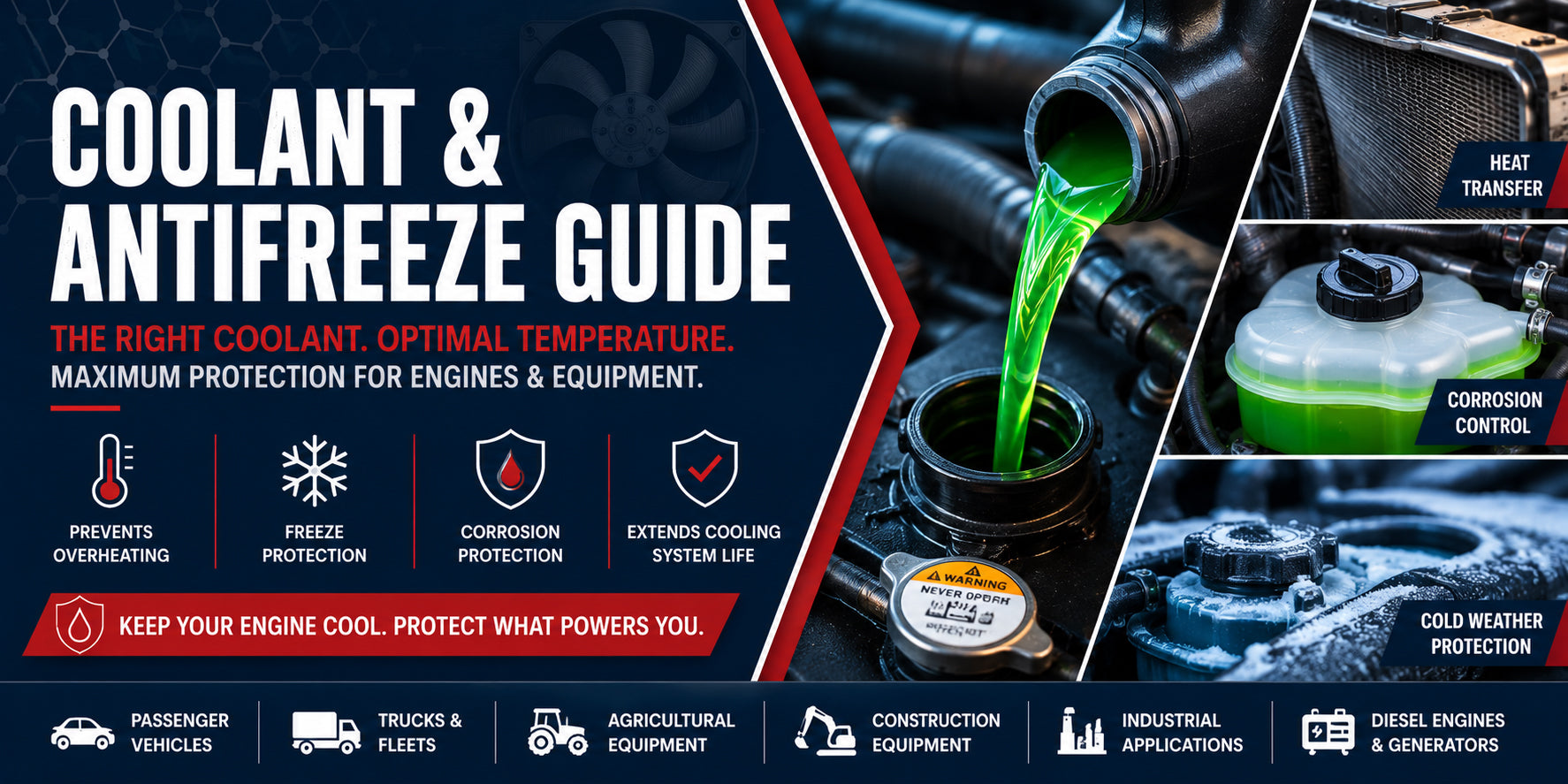
Prevents Overheating
Coolant helps transfer heat away from the engine during operation.
Freeze Protection
Antifreeze helps prevent coolant freezing in cold weather conditions.
Corrosion Protection
Modern coolant helps protect radiators, water pumps, and metal surfaces.
Longer Cooling System Life
Proper coolant maintenance helps extend cooling system performance.
What Is Coolant & Antifreeze?
Coolant is a heat-transfer fluid used in engine cooling systems to regulate operating temperature. Antifreeze is typically mixed with water and additives to improve freeze protection, boil protection, corrosion resistance, and cooling system durability.
Modern coolants are formulated using different additive technologies, including conventional inorganic additives, OAT technology, and hybrid organic acid technologies.
What Does Coolant Do?
- Transfers heat away from the engine.
- Helps prevent engine overheating.
- Provides freeze protection during cold weather.
- Protects metal surfaces from corrosion and rust.
- Helps lubricate water pumps and cooling system components.
- Supports long-term cooling system performance.
Common Types of Coolant & Antifreeze
Conventional Green Coolant
Traditional coolant technology commonly used in older vehicles and heavy-duty applications.
OAT Coolant
Organic Acid Technology coolant designed for extended service life and modern cooling systems.
HOAT Coolant
Hybrid Organic Acid Technology coolant combines traditional and organic additive technologies.
Heavy-Duty Diesel Coolant
Heavy-duty coolant is designed for diesel engines operating under demanding load and temperature conditions.
Coolant Colors Explained
Coolant colors help identify coolant technologies, but color alone should never be used to determine compatibility. Always check OEM specifications and product requirements.
| Coolant Color | Common Technology | Typical Applications |
|---|---|---|
| Green | Conventional coolant | Older vehicles and heavy-duty systems |
| Red / Orange | OAT technology | Extended-life applications |
| Yellow | HOAT technology | Modern automotive cooling systems |
| Blue | OEM-specific coolant | Asian vehicle applications |
What Does 50/50 Coolant Mean?
50/50 coolant refers to a pre-mixed solution containing approximately 50% antifreeze and 50% water. This ratio is commonly used because it provides balanced freeze protection, boil protection, and heat-transfer performance.
How to Choose the Right Coolant
- Check the vehicle or equipment manufacturer recommendations.
- Match the coolant technology required for the cooling system.
- Consider climate conditions and freeze protection requirements.
- Use heavy-duty coolant for diesel engines and industrial equipment when required.
- Avoid mixing incompatible coolant technologies unless compatibility is confirmed.
Best Coolant by Application
Passenger Vehicles
Modern vehicles often use OAT or HOAT coolant technologies depending on OEM requirements.
Diesel Engines
Heavy-duty diesel engines commonly require extended-life coolant with corrosion protection.
Construction Equipment
Heavy-duty coolant helps support cooling system protection under demanding operating conditions.
Agricultural Equipment
Farm equipment often uses heavy-duty coolant for long operating hours and varying climates.
Common Coolant Mistakes to Avoid
Mixing Incompatible Coolants
Different coolant technologies may not be compatible and can reduce cooling system protection.
Using Only Water
Water alone does not provide adequate freeze protection or corrosion resistance.
Ignoring Coolant Maintenance
Old coolant may lose corrosion inhibitors and cooling performance.
Using the Wrong Coolant Type
Using incorrect coolant may affect seals, metals, and cooling system durability.
Coolant & Antifreeze FAQs
What is the difference between coolant and antifreeze?
Antifreeze is the concentrated chemical solution, while coolant usually refers to the mixed fluid used in the cooling system.
Can different coolant colors be mixed?
Coolant color alone does not determine compatibility. Always verify coolant technology and OEM requirements before mixing.
What does 50/50 coolant mean?
50/50 coolant contains approximately equal parts antifreeze and water for balanced protection.
Why is coolant important?
Coolant helps control temperature, prevent freezing, reduce corrosion, and protect cooling system components.
Shop Coolant & Antifreeze
Explore coolant and antifreeze products for passenger vehicles, heavy-duty diesel engines, industrial equipment, and cooling system protection.
View Coolant Products