Heat Transfer Oil Guide: How to Choose the Right Thermal Oil for Industrial Heating Systems
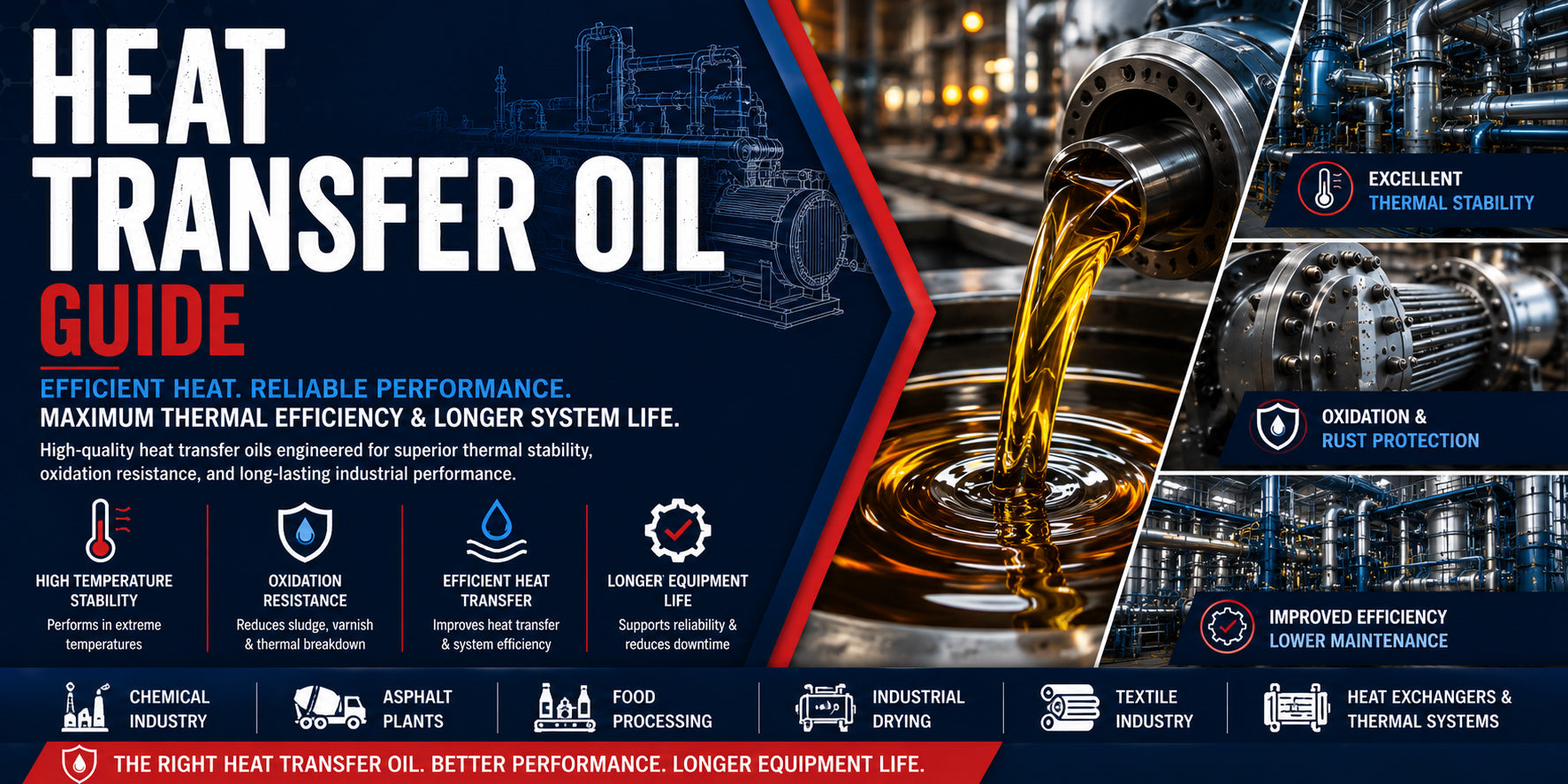
Heat transfer oils are specially formulated thermal fluids designed to transfer heat efficiently in industrial heating systems operating under high temperatures. Choosing the correct heat transfer oil helps improve thermal efficiency, system reliability, oxidation resistance, and long equipment life.
The best heat transfer oil depends on operating temperature, system design, oxidation stability, thermal efficiency, and whether the system is open or closed loop. Heat transfer oils are commonly used in manufacturing, asphalt plants, food processing, chemical processing, and industrial heating systems.
Quick Heat Transfer Oil Facts
Efficient Heat Transfer
Designed to transfer heat efficiently through industrial systems.
High Temperature Stability
Built for continuous operation under elevated temperatures.
Oxidation Resistance
Helps reduce sludge, varnish, and thermal breakdown.
Longer Fluid Life
Proper thermal oil selection supports longer service intervals.
What Is Heat Transfer Oil?
Heat transfer oil, also called thermal oil or thermal fluid, is a specialized fluid designed to transfer heat from one area to another within industrial heating systems.
These fluids circulate through heaters, piping systems, heat exchangers, and industrial equipment to maintain controlled temperatures during manufacturing and industrial processes.
How Does Heat Transfer Oil Work?
Step 1
The thermal oil is heated inside a heater or furnace system.
Step 2
Heated oil circulates through piping and heat exchangers.
Step 3
Heat transfers into industrial equipment or production systems.
Step 4
The cooled fluid returns to the heater to repeat the cycle.
Common Applications for Heat Transfer Oil
- Asphalt plants
- Chemical processing systems
- Food processing equipment
- Plastic and rubber manufacturing
- Industrial drying systems
- Textile manufacturing
- Wood processing equipment
- Industrial heat exchangers
Benefits of Heat Transfer Oil
Thermal Stability
High-quality thermal oils resist breakdown at elevated temperatures.
Cleaner Systems
Good oxidation resistance helps reduce sludge and carbon deposits.
Efficient Heat Transfer
Helps maintain stable operating temperatures throughout the system.
Reduced Downtime
Proper thermal fluid maintenance supports reliable industrial operation.
Open vs Closed Heat Transfer Systems
| System Type | Description | Common Use |
|---|---|---|
| Closed System | Sealed system with limited oxygen exposure | Most industrial heating applications |
| Open System | System exposed to atmosphere and oxygen | Lower-temperature heating applications |
How to Choose the Right Heat Transfer Oil
- Check the system’s maximum operating temperature.
- Consider whether the system is open loop or closed loop.
- Select thermal oils with strong oxidation stability.
- Ensure compatibility with equipment manufacturer requirements.
- Monitor fluid condition regularly for contamination or degradation.
Common Heat Transfer Oil Problems
Oxidation
Excessive oxygen exposure may cause fluid breakdown and sludge formation.
Thermal Cracking
Excessive temperatures may cause thermal decomposition of the fluid.
Carbon Deposits
Poor fluid maintenance may lead to carbon buildup and reduced efficiency.
Contamination
Water or foreign contaminants may reduce thermal performance.
Common Heat Transfer Oil Mistakes to Avoid
Running Beyond Temperature Limits
Excessive heat may accelerate oxidation and fluid degradation.
Ignoring Fluid Analysis
Oil analysis helps identify contamination and fluid condition issues early.
Poor Ventilation
Improper ventilation may contribute to overheating and oxidation.
Mixing Different Thermal Fluids
Mixing incompatible fluids may affect thermal stability and system performance.
Heat Transfer Oil FAQs
What is heat transfer oil used for?
Heat transfer oil is used in industrial heating systems to transfer thermal energy efficiently.
What temperature can heat transfer oil handle?
Temperature capability depends on the thermal fluid formulation and system design.
Why does thermal oil oxidize?
Oxidation occurs when thermal oil is exposed to oxygen and elevated temperatures over time.
How often should heat transfer oil be tested?
Regular oil analysis is recommended to monitor fluid condition and system performance.
Shop Heat Transfer Oils
Explore heat transfer oils designed for industrial heating systems, thermal processing equipment, manufacturing operations, and high-temperature industrial applications.
View Heat Transfer Oil Products