Compressed air powers everything from manufacturing lines and pneumatic tools to packaging equipment and maintenance systems. While compressors are built for durability, their long-term performance depends heavily on one critical factor—using the correct lubricant.
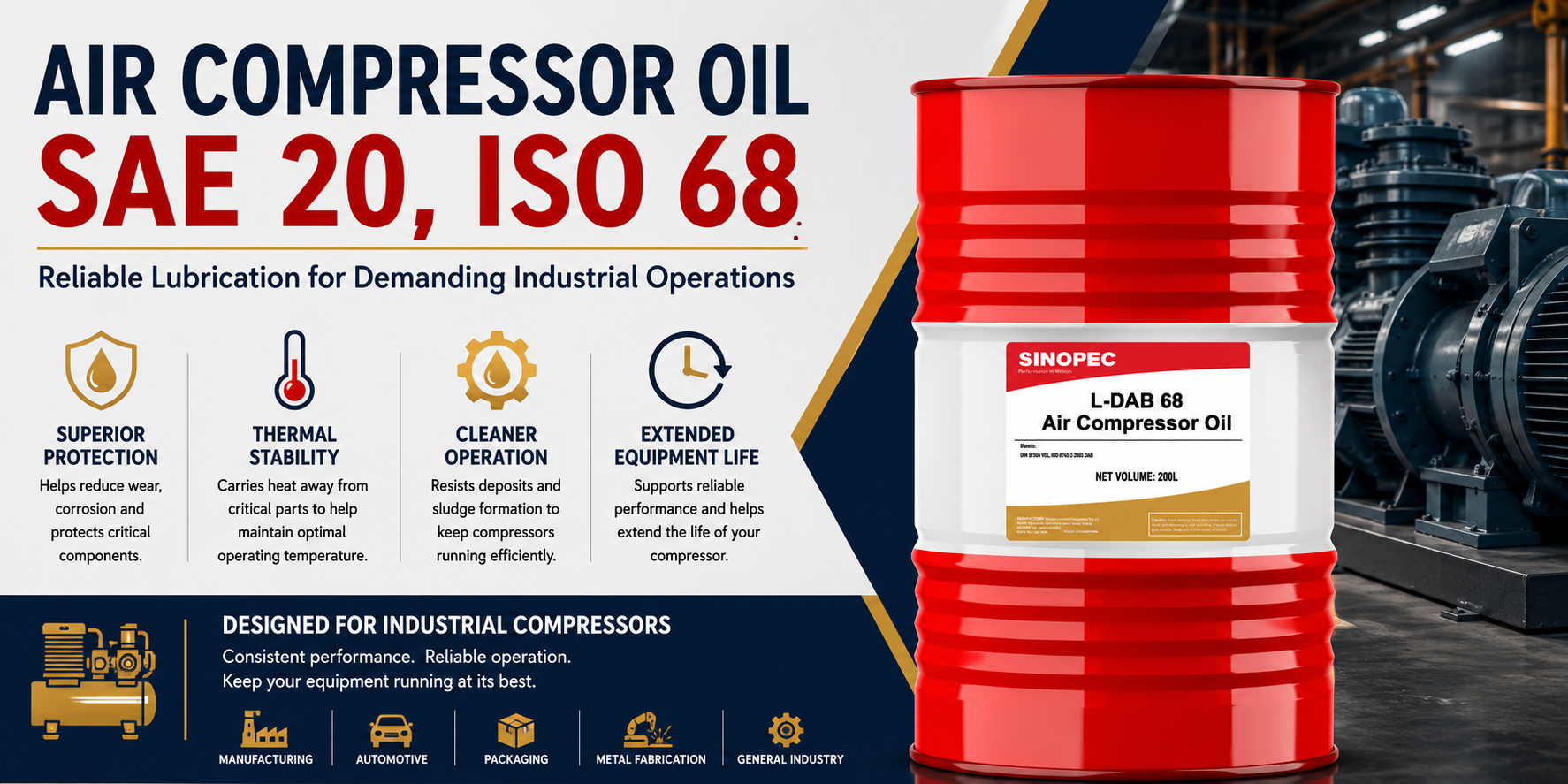
SAE 20 (ISO VG 68) Air Compressor Oil is widely used in industrial air compressors operating under moderate to demanding conditions. It provides a balance between oil flow, film strength, and thermal stability, helping compressors operate efficiently while protecting critical internal components.
Selecting the correct viscosity not only improves reliability but also helps reduce wear, lower maintenance costs, and extend equipment life.
What Is SAE 20 (ISO VG 68) Air Compressor Oil?
SAE 20 (ISO VG 68) Air Compressor Oil is a medium-high viscosity lubricant designed for industrial air compressors that require ISO VG 68 or SAE 20 compressor oil.
Its primary functions include:
- Lubricating moving components
- Reducing friction and wear
- Carrying heat away from critical parts
- Protecting against oxidation and corrosion
- Helping prevent deposits and sludge
- Supporting efficient compressor operation
Using the correct lubricant allows internal components to operate with less resistance while maintaining a protective oil film.
Why Compressor Oil Viscosity Is Important
Oil viscosity determines how easily lubricant flows through the compressor and how effectively it separates moving metal surfaces.
A viscosity that is too low may not provide sufficient protection under heavier operating loads.
A viscosity that is too high may circulate more slowly during startup and reduce operating efficiency.
ISO VG 68 provides an excellent balance between:
- Strong lubricating film
- Efficient oil circulation
- Reliable heat transfer
- Wear protection
- Oxidation resistance
This makes it a common viscosity for many industrial compressor applications where moderate to higher operating temperatures are expected.
Where ISO VG 68 Compressor Oil Is Commonly Used
SAE 20 (ISO VG 68) Air Compressor Oil is commonly specified for compressors operating in demanding industrial environments.
Manufacturing Facilities
Compressed air supports:
- Production lines
- Robotic automation
- CNC machinery
- Material handling systems
- Pneumatic cylinders
Reliable lubrication helps maintain continuous production while minimizing unplanned downtime.
Metal Fabrication
Compressed air powers:
- Plasma cutting equipment
- Pneumatic grinders
- Presses
- Air tools
- Finishing equipment
These operations often involve continuous compressor operation and elevated temperatures.
Packaging Plants
Packaging facilities rely on compressed air for:
- Filling machines
- Labeling systems
- Conveyors
- Pick-and-place equipment
- Carton sealing machines
Consistent compressor performance helps maintain production efficiency.
Woodworking Facilities
Industrial compressors are frequently used for:
- Nail guns
- Spray finishing
- Dust collection controls
- Pneumatic machinery
Clean, reliable compressor operation helps improve equipment reliability.
Maintenance Workshops
Compressed air is essential for:
- Impact wrenches
- Air ratchets
- Spray equipment
- Tire inflation
- General repair work
Using the proper lubricant helps compressors perform consistently throughout daily operation.
Why Many Industrial Compressors Use ISO VG 68
Compared with lighter viscosity oils, ISO VG 68 provides a stronger lubricating film that can better protect components operating under moderate to heavier mechanical loads.
Benefits include:
- Improved wear protection
- Better lubrication under higher temperatures
- Stable oil film
- Lower friction
- Reduced component wear
- Improved reliability
The correct viscosity should always match the compressor manufacturer's recommendations.
Components Protected by Compressor Oil
Compressor oil continuously lubricates many critical components, including:
- Bearings
- Crankshaft
- Connecting rods
- Pistons
- Cylinder walls
- Valve assemblies
- Oil pump
- Internal oil passages
Proper lubrication helps reduce direct metal-to-metal contact and supports smooth compressor operation.
Common Causes of Compressor Oil Degradation
Even premium compressor oils gradually deteriorate during operation.
Factors that accelerate oil degradation include:
High Operating Temperatures
Excessive heat speeds oxidation and shortens oil life.
Moisture Contamination
Water reduces lubrication performance and may promote corrosion.
Dust and Dirt
Contaminants increase wear and can clog filters.
Oxidation
Over time, oxidation forms acids and varnish that reduce oil performance.
Extended Oil Change Intervals
Using oil beyond its recommended service life increases the risk of deposits and component wear.
Signs Your Compressor Oil Needs Attention
Routine inspections can identify lubrication problems before they become major repairs.
Watch for:
- Dark or burnt oil
- Sludge or varnish deposits
- Higher operating temperatures
- Increased compressor noise
- Reduced air output
- Frequent shutdowns
- Higher energy consumption
Addressing these issues early can help avoid costly downtime.
Best Practices for Compressor Lubrication
To maximize compressor performance:
- Always use the viscosity recommended by the compressor manufacturer.
- Check oil levels regularly.
- Replace oil filters on schedule.
- Keep cooling systems clean.
- Monitor operating temperature.
- Follow recommended oil drain intervals.
- Consider oil analysis for heavily used industrial compressors.
Preventive maintenance helps extend compressor life and improve reliability.
ISO VG 68 Compared to Other Compressor Oil Grades
| Viscosity Grade | Typical Applications |
|---|---|
| ISO VG 32 (SAE 10) | Lighter-duty compressors and cooler operating conditions |
| ISO VG 46 (SAE 15) | Medium-duty industrial compressor applications |
| ISO VG 68 (SAE 20) | Industrial compressors operating under moderate to demanding conditions |
| ISO VG 100 (SAE 30) | Heavy-duty reciprocating compressors and higher operating temperatures |
Selecting the proper viscosity depends entirely on the compressor manufacturer's specification.
Industries That Commonly Use ISO VG 68 Compressor Oil
SAE 20 (ISO VG 68) Air Compressor Oil is commonly used across many industrial sectors, including:
- Manufacturing
- Metal fabrication
- Packaging
- Automotive service
- Warehousing
- Woodworking
- Printing
- General industrial maintenance
- Food processing support equipment
- Distribution centers
Frequently Asked Questions
What is SAE 20 (ISO VG 68) compressor oil used for?
It is used in industrial air compressors that require a medium-high viscosity lubricant to provide reliable lubrication, wear protection, heat transfer, and oxidation resistance.
Is ISO VG 68 thicker than ISO VG 46?
Yes. ISO VG 68 has a higher viscosity than ISO VG 46, producing a thicker lubricating film for applications where additional protection is required.
Can ISO VG 68 replace ISO VG 46?
Only if the compressor manufacturer specifies ISO VG 68. Using a higher viscosity than recommended may affect startup performance and lubrication characteristics.
Can ISO VG 68 replace ISO VG 100?
No. ISO VG 100 provides a significantly thicker oil film and is intended for different operating conditions and compressor designs.
How often should compressor oil be changed?
Oil change intervals depend on compressor type, operating environment, oil formulation, and manufacturer recommendations. Following the maintenance schedule provided by the equipment manufacturer is the best practice.
Choosing the Right Compressor Oil for Your Equipment
When selecting compressor oil, consider:
- The compressor manufacturer's viscosity recommendation
- Compressor type (rotary screw, reciprocating, or centrifugal)
- Operating temperature
- Duty cycle
- Ambient environment
- Maintenance schedule
Choosing the proper lubricant helps maximize equipment performance while reducing wear and maintenance costs.
SAE 20 (ISO VG 68) Air Compressor Oil is an excellent choice for many industrial air compressors operating under moderate to demanding conditions. Its balanced viscosity helps maintain a strong lubricating film, supports efficient heat transfer, reduces wear, and promotes reliable compressor performance.
By using the correct oil viscosity and following a proactive maintenance program, facilities can improve equipment reliability, reduce unexpected downtime, extend compressor service life, and lower total operating costs.